Meal Plan for Two Weeks on a Budget
· CookBuddy
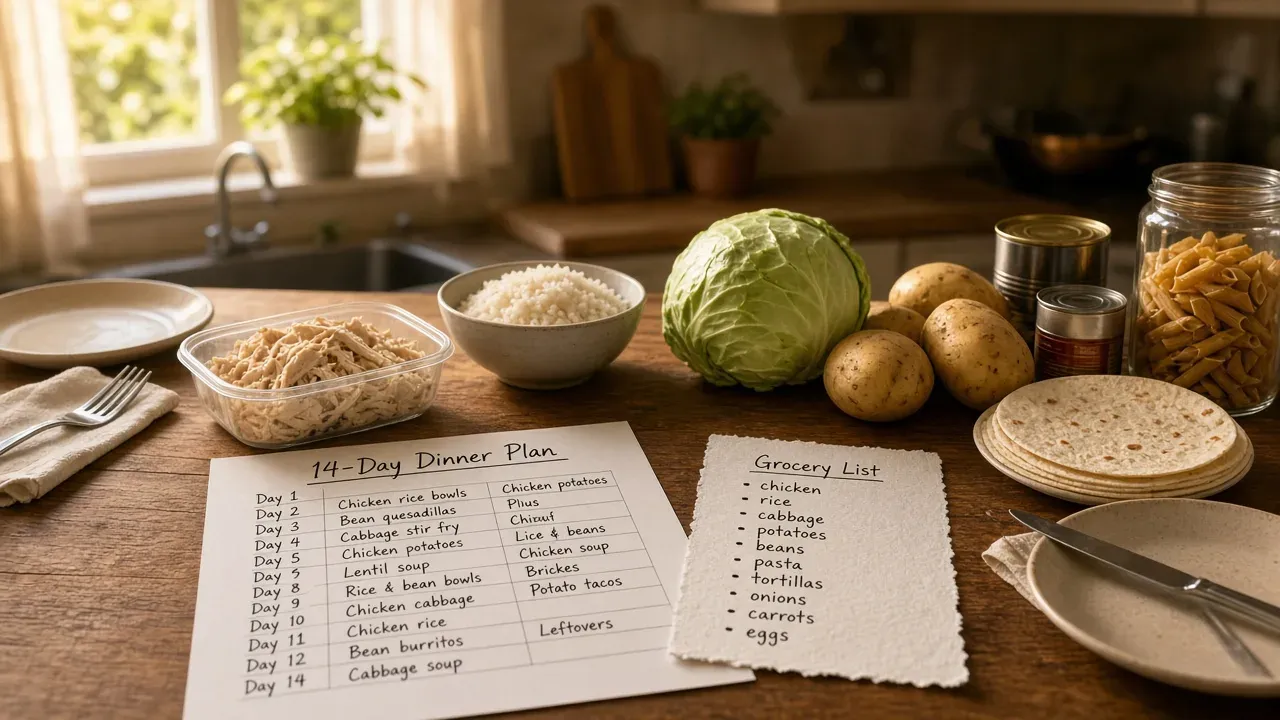
This meal plan for two weeks on a budget gives you 14 day-by-day dinners for two people, one grocery list per week built from ingredients shared across consecutive meals, and a leftover-reuse map so Monday's roast chicken becomes Wednesday's tacos instead of a repeat dinner. You decide once, shop twice, and stop asking what's for dinner.
Key takeaways
- Structure 14 dinners for two by carrying ingredients forward across consecutive meals so each week needs only one grocery list.
- Cook full four-serving recipes on purpose roughly once a week to create intentional leftovers that cut cooking nights and shrink your grocery spend.
- Sequence meals backwards from spoilage: use delicate greens, fresh herbs, and fish in days 1-4, then shift to hardier produce and frozen meats.
- Swap within the same ingredient family when prices change to keep the grocery list short without breaking the leftover-reuse chain.
- Give every leftover a named destination before you cook so nothing rots in a forgotten container.
What does a two-week meal plan for two on a budget actually look like?
Here is the full 14-day dinner calendar, built for two servings, with no dinner repeated back-to-back. Every meal borrows an ingredient from the one before it, so each week needs one grocery list instead of seven shopping trips.
Week 1 dinners (days 1-7)
| Day | Dinner | Carried forward |
|---|---|---|
| 1 | Roast chicken thighs with potatoes | Extra chicken reserved |
| 2 | Chicken tacos with slaw | Day 1 chicken, half a cabbage |
| 3 | Black bean and rice bowls | Taco-seasoned beans, cooked rice |
| 4 | Fried rice with eggs and frozen peas | Day 3 rice |
| 5 | Sausage, cabbage, and potato sheet-pan | Remaining cabbage, potatoes |
| 6 | Pasta with tomato sauce and white beans | Pantry only |
| 7 | Vegetable soup with pasta | Day 6 pasta, leftover sauce |
Week 2 dinners (days 8-14)
| Day | Dinner | Carried forward |
|---|---|---|
| 8 | Pork chops with roasted carrots | Extra carrots |
| 9 | Pork fried rice | Day 8 pork, Day 4 rice habit |
| 10 | Carrot and lentil stew | Day 8 carrots |
| 11 | Stew over mashed potatoes | Potato bag from Week 1 |
| 12 | Fish tacos with cabbage slaw | Frozen fish, cabbage |
| 13 | Chicken quesadillas | Freezer chicken from Day 1 |
| 14 | Clean-out fried rice or soup | Whatever remains |
The sequencing is deliberate: raw meat gets cooked within the window USDA food storage guidance allows (poultry, fish, and ground meat within two days, other meats within three to five), and produce that wilts fast (cabbage is the exception) gets used in the first half of each week. Freeze extra Day 1 chicken the night you roast it so Day 13 quesadillas stay inside that window. If you want to plug your own saved recipes into a structure like this, AI meal planning shows how to turn videos and screenshots into a plan like the one above.
How do you build a two-week meal plan when most recipes serve four?
Most recipes serve four to six, so every two-week plan needs a scaling rule. Halve recipes with simple arithmetic: soups, pasta, stir-fries, and casseroles scale cleanly because nothing depends on precise pan size. Skip halving for baked goods and anything where pan size changes cook time, like meatloaf.
Then cook the full batch on purpose, roughly once a week. A double batch of chili on Monday becomes chili mac on Thursday, and a whole roast chicken becomes tacos two nights later. These intentional leftovers cut cooking nights and shrink your grocery list, which is where the budget savings come from.
Save both versions: the original you found on TikTok and your halved notes, so week two runs without re-deriving quantities. If your screenshots live in your camera roll, a searchable recipe box like CookBuddy keeps the scaled versions next to the originals. See the best recipe app 2026 guide for how that capture step works.
What should a two-week grocery list for two people include?
Week 1 grocery list
Week 1 leans on proteins and produce that work across consecutive dinners: chicken thighs (roast Day 1, tacos Day 2, freeze a portion for Day 13 quesadillas), a bag of potatoes that feed the roast and the sausage sheet-pan, a cabbage split between slaw and the sheet-pan, plus rice that stretches over bowls and fried rice. Buy tortillas, eggs, sausage, canned black beans, and frozen peas. Every fresh item should appear in at least two dinners before it spoils.
Week 2 grocery list
Week 2 is cheaper by design: you restock only what ran out. Pork chops become Day 8 dinner and Day 9 fried rice. Extra roasted carrots move into lentil stew. Frozen fish, remaining cabbage, and tortillas cover fish tacos. Cheese and the reserved freezer chicken make quesadillas. If you saved recipes from social videos to build this plan, keep them attached to each list item so the week survives a substitution. Start with how to save recipes from social media.
The pantry starter list (buy once, use all 14 days)
Buy once in week 1: rice, dried pasta, canned tomatoes, beans, oats, flour, oil, soy sauce, garlic, and your core spices. This one-time haul is what keeps the weekly lists short and the total spend low. For context on how grocery prices move while you plan, the USDA tracks them monthly in its Food Price Outlook. For a reusable pantry-plus-fresh template, see the meal prep for beginners shopping list.
How do you reuse ingredients across meals without eating the same dinner twice?
The reuse map, day by day
The trick is cooking once and assigning the extras a second job two or three days later. Roast chicken thighs on Day 1, and Day 2 tacos use the leftover meat. Cook a double batch of rice with Day 3 bowls, and Day 4 fried rice reheats it. Day 6 pasta sauce becomes Day 7 soup. Day 8 pork and carrots feed fried rice and stew. Each leftover gets a named destination, so nothing rots in a container you forget about.
The no-repeat rule
Never serve the same protein or the same leftover transformation on consecutive nights. Chicken tacos on Day 2 means Day 3 is beans, even if chicken remains in the freezer. Space the reuses so each one reads as a different dinner: shredded chicken in tacos, then in quesadillas, then nowhere for four days. If you save the recipes behind this plan in one place instead of screenshots, swaps stay easy; our guide to recipe organization covers how.
How should you sequence meals so fresh ingredients don't spoil before day 10?
Fresh-first, frozen-last ordering
The calendar is built backwards from spoilage. Days 1-4 use the delicate stuff: leftover cooked chicken (eaten within a couple of days), herbs for tacos, and eggs. Days 5-7 shift to hardier produce like cabbage and potatoes, plus pantry pasta. Week two repeats the pattern with pork, then carrots and lentils, then frozen fish, so nothing sits in the fridge longer than about four days. USDA leftover guidance is three to four days in the refrigerator, or freeze for later.
This is also why no dinner repeats back-to-back. Day 1 roast chicken becomes Day 2 tacos, not a second roast, which keeps the plan interesting while the leftover-reuse map does the budget work.
When a recipe you saved from a video fits the plan, CookBuddy turns it into a written recipe in under 3 seconds, so sequencing a saved post into the right slot takes no extra effort. If you'd rather keep the plan in a free tool, see our guide to a recipe app with no subscription.
Which pantry staples make budget meal planning cheaper over 14 days?
A short shelf-stable backbone carries most of the plan: rice, dried or canned beans, pasta, oats, canned tomatoes, stock, eggs, onions, and garlic. Each pulls double duty. Rice under the week-one bowls and the week-two fried rice. Beans stretch taco night and become soup.
Canned tomatoes cover pasta and soup. Eggs bind leftover-rice fried rice. Onions and garlic show up in nearly every dinner, so buy them once.
Stored properly, these staples last months, not days, so you can buy them in one trip and skip mid-plan restocking. The USDA's FoodKeeper lists storage times for pantry items like rice, pasta, and canned goods. Spend the savings on the two or three fresh proteins per week instead.
How do you adjust portion sizes when cooking for two on a budget?
Most recipes serve four, and cooking all four servings is usually the cheapest move. Plan on roughly 6 to 8 ounces of protein per dinner for two adults, then eat the extra half as lunch the next day instead of forcing it into a second dinner. When a recipe says "serves 4," read it as "dinner for two plus two lunch portions" and only cut it in half if the leftovers would spoil before you'd eat them. Braises, chilis, and roasted meats hold well for days; delicate fish and stir-fries do not, so halve those or shop for them mid-plan.
How do you swap meals in the plan when prices or sales change?
Swap within the same ingredient family, and the grocery list barely moves. If chicken thighs spike, sub pork shoulder into the tacos and keep the tortillas, cabbage, and lime. If broccoli is $2 off, trade it for the green beans in a stir-fry. The rule: change the protein or vegetable, keep the sauce, starch, and aromatics that overlap with neighboring meals.
When a sale suggests a bigger swap, check that the new meal still shares at least one fresh ingredient with the meal before or after it. That single check is what keeps week two's list short.
Once the plan is final, save it somewhere you can actually search. A recipe keeper like Paprika Recipe Manager stores recipes you import, and CookBuddy converts saved cooking videos into written recipes, so the swapped version lives in your recipe box instead of your camera roll. For household-scale sharing, see the family meal planning app guide.
How do you keep the plan and its recipes organized without screenshots?
A plan only survives if the 14 recipes behind it live somewhere searchable. Screenshots rot in your camera roll; a written recipe box means Monday's chicken dinner is still findable in week six.
Turning saved videos into a reusable plan
Convert each saved TikTok or YouTube video into a written recipe, then tag it with the meals it feeds. CookBuddy does this in under 3 seconds per video and keeps every recipe, so your leftover-reuse map references real recipes, not links you'll never reopen. Paprika Recipe Manager works the same way for people who prefer importing from websites.
Honest limits: what recipe apps still don't do
CookBuddy Free includes 5 imports per month and unlimited storage, so a 14-dinner plan fits if you already have recipes saved, but converting all 14 in one month on the free tier will hit the import wall. Premium is $2.99/mo for unlimited imports. None of these apps plan meals for you: CookBuddy stores recipes and organizes them with dietary filters, while Paprika and Mr. Cook store recipes and can build grocery lists from what you select. The day-by-day sequencing, the portion math for two, and the swap decisions stay yours. A reader asked for built-in meal prep planning, and it isn't there yet; it's a feature request, not a shipped feature.
FAQ
How much should two people spend on groceries for two weeks?
It depends on your region and protein choices, so treat any single dollar figure with suspicion. The structure matters more: one pantry haul up front, then two short fresh-food lists. The USDA tracks grocery price movements monthly in its Food Price Outlook if you want current context for your area.
Is it cheaper to meal plan for two weeks or one week at a time?
Two weeks wins on pantry economics. Buying rice, beans, pasta, and canned tomatoes once covers 14 dinners, and every fresh item gets assigned to at least two meals before it spoils. Weekly planning means more shopping trips and more orphaned half-used produce, though it needs less discipline when schedules change.
How do you meal plan for two people without wasting food?
Give every leftover a named destination before you cook. Roast chicken on Day 1 means tacos on Day 2, not a container you forget about. Order the plan by spoilage: leftover cooked meat and herbs early; carrots, cabbage, and potatoes later. Never serve the same protein two nights running.
Can I meal prep a two-week plan in one day?
Not fully, and you shouldn't try. Cooked rice, grains, and braises hold for days, but delicate fish and stir-fries degrade fast, and food safety guidance limits how long raw meat sits in the fridge. Prep the backbone in one session: cook grains, roast proteins, chop hardy vegetables, then assemble fresh components on shorter cooking nights. For a 10-15 dinner rotation you can reuse after these two weeks, see weeknight dinner ideas. For a two-hour weekly cook that matches a prep style to your week, see easy weekly meal prep ideas. For a rental week with other families, see family beach vacation meal planning. For 15-minute dinners that skip the 14-day calendar, see easy quick delicious dinner recipes.
What dinners can I make with the same groceries?
Plenty, if each reuse reads as a different dinner. One roast of chicken thighs becomes tacos, then quesadillas. A pot of rice underlies bowls and fried rice. Cabbage covers slaw for two taco nights plus a sheet-pan dinner. Canned tomatoes stretch across pasta and soup. The trick is changing the format, not the ingredients.
meal-planningbudgetmeal-prepcookbuddyleftovers
CookBuddy turns cooking videos, webpages, and photos into written recipes you can keep in one cookbook.