Easy Quick Delicious Dinner Recipes: 15-Minute Rotation
· CookBuddy
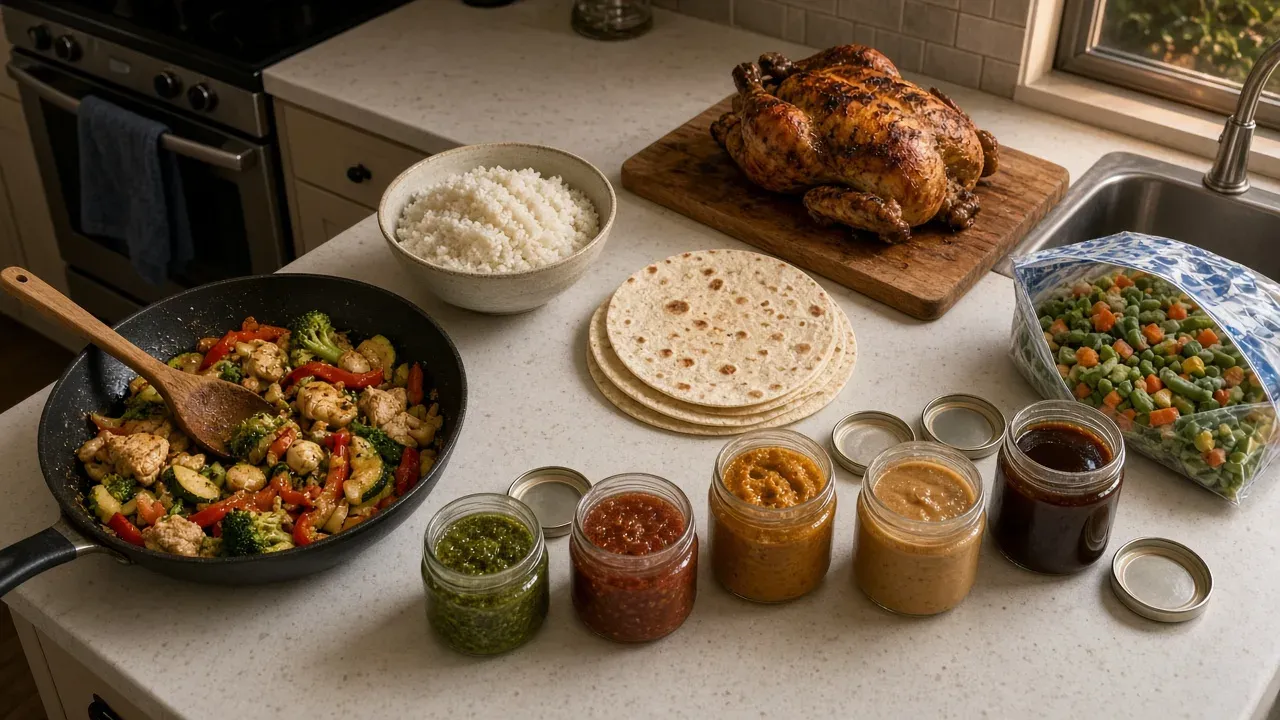
Stop chasing individual recipes and build a rotation instead: pick one pantry staple, one protein, and one shortcut ingredient, and you have easy quick delicious dinner recipes that come together in 15 minutes on repeat. This piece gives you the three-slot formula, a worked dinner for every combination, and a rule for how many rotation meals a workweek actually needs.
Key takeaways
- A real 15-minute dinner means 15 minutes of hands-on time, excluding marinating, resting dough, or prep-heavy recipes.
- Build dinners from three slots: a pantry staple base, a protein that cooks in under 10 minutes, and a shortcut ingredient like pesto or curry paste.
- Rotisserie chicken, jarred sauces, and frozen vegetables save the most minutes per dollar among common shortcuts.
- Eight to ten rotation meals, with no two sharing the same protein, covers a workweek without repetition fatigue.
- Change the sauce, not the meal: five jars turn one base formula into five different dinners.
What actually counts as a 15-minute dinner (and what doesn't)?
A 15-minute dinner means 15 minutes of your hands-on time, not the recipe's claimed total. A TikTok video cut to 60 seconds can hide 20 minutes of chopping, marinating, or simmering. Before a recipe earns a spot in your rotation, check whether the active steps fit the budget: if it says "quick weeknight dinner" and lists a 30-minute sauce reduction, it doesn't qualify.
Two honest exclusions: anything requiring marinating or dough to rest, and anything where most of the work is prep. Rotisserie chicken and pre-cooked proteins change the math, but only if you use or refrigerate them promptly. Perishable cooked food should go in the fridge within about two hours, per USDA leftover guidance, so the shortcut only works if your timing is real. The USDA FoodKeeper is the practical check for how long leftover chicken, shrimp, and cooked rice actually keep.
Once you've filtered honestly, keep the survivors in one place. CookBuddy converts the videos that pass this test into written recipes you can scan mid-cook. For a 60-second pick from recipes you already saved, see weeknight dinner ideas.
How do you build a dinner from pantry staples without a recipe?
Skip the recipe hunt and fill three slots: a pantry staple base, one protein, and one shortcut ingredient. Any combination that passes all three slots becomes a real dinner, and most combos take under 15 minutes.
Slot 1: the pantry staple base
This is the cheap, shelf-stable thing that carries the meal: rice, pasta, tortillas, canned beans, or potatoes. Cook a big batch of rice or keep tortillas on hand and slot 1 is already done before you walk in the door. Aim for three bases you always restock so the answer to "what's for dinner" never starts at zero.
Slot 2: the protein
Pick something fast: rotisserie chicken from the store, canned tuna or beans, eggs, shrimp, or thin-cut chicken thighs. The rule is simple: if it needs more than 10 minutes of cooking, it does not belong in a weeknight slot. Frozen shrimp and pre-cooked sausage are the two worth keeping in the freezer permanently.
Slot 3: the shortcut ingredient
This is the flavor that makes the same base taste like a different meal: pesto, salsa, curry paste, peanut sauce, or a bagged slaw mix. One jar turns rice and chicken into dinner; a different jar turns the same ingredients into a different dinner.
Write down the combos that work, with the rough ratios, so they become repeatable. A searchable recipe box like CookBuddy works for this even when the "recipe" is three lines you typed yourself, and it keeps your rotation out of the camera roll where saved posts go to die. If you still want a two-hour Sunday cook behind the rotation, see easy weekly meal prep ideas.
Which shortcut ingredients save the most time per dollar?
The best shortcuts cut 10+ minutes of prep for a dollar or two of markup, while the worst cost $5+ to save seconds. Rank them by minutes saved per dollar spent and rotisserie chicken, jarred sauces, and frozen vegetables come out on top. Pre-shredded cheese and bagged salad mix sit in the middle: real time savings, but you pay roughly double the block or whole-head price, and USDA Food Price Outlook data shows produce markups vary by region and season, so check your own store's price gap.
| Shortcut | Time saved | Typical extra cost | Verdict |
|---|---|---|---|
| Rotisserie chicken | 45+ min (skip cooking a whole bird) | $2-4 over raw chicken | Best value |
| Jarred pasta or stir-fry sauce | 10-15 min | $1-3 | Strong buy |
| Frozen veggie blends | 8-10 min (no washing, chopping) | $0-1 | Strong buy |
| Pre-minced garlic or ginger | 5 min | $1-2 | Good if you hate mincing |
| Pre-shredded cheese | 3-4 min | ~$1-2 | Situational |
| Bagged salad kits | 5 min | $2-4 | Only on sale |
One caveat: a rotisserie chicken only beats raw chicken if you actually use the leftovers. Save the picked-clean carcass ideas in your recipe box rather than tossing them; what CookBuddy does is keep those notes next to the meals you already cook. For stretching one roast across later dinners, see meal plan for two weeks on a budget.
How do you adapt one base formula across different proteins?
Take one formula: aromatics plus protein plus shortcut ingredient plus a finishing sauce, all cooked in one pan. The swap logic stays the same every time. Chicken thigh pieces, raw shrimp, drained canned beans, cubed tofu, and sliced smoked sausage all fit the same skillet, but each changes two things: when you add it and how long it cooks.
Here is the worked example. Start with garlic and onion in oil, then add your protein, then a bag of pre-cut stir-fry vegetables, then a sauce of soy, honey, and a splash of vinegar. Chicken thighs go in first and need 6-7 minutes. Shrimp goes in after the vegetables and needs 2-3 minutes, or it turns rubbery. Beans and tofu both go in with the vegetables because they only need heating and crisping. Sausage is already cooked, so it goes in early purely to brown and coat the pan with fat.
That timing difference is the entire skill. Once you know whether a protein is "cook it through" or "just warm it up," the rest of the formula never changes. Write the timing next to each protein in your recipe box so weeknight dinners run without thinking. If you keep these as saved screenshots, converting them into written steps you can actually follow mid-cook is where a recipe keeper earns its place. Our Paprika Recipe Manager review covers how established keepers handle this and where they fall short on speed.
How many rotation meals do you need to cover a workweek?
Eight to ten meals covers a workweek comfortably. Five dinners with two or three backups means you cook the same meal at most every two weeks, which is often enough variety to stop the "what's for dinner" dread without ever opening your saved-posts folder.
The math is simple: 30 candidate meals means 30 sets of ingredients to remember and restock. Eight means your grocery list writes itself, because you already know you'll need tortillas, a protein, and one shortcut ingredient most weeks.
Pick your eight by the mix-and-match rule: each one combines a pantry staple, a protein, and a shortcut ingredient, and no two share the same protein. That gives you built-in variety without extra planning. If you want a longer tagged list to pull those eight from, start with 15 easy weeknight dinners tagged by time.
When you find a video recipe worth keeping, save it properly instead of leaving it in your camera roll. A searchable recipe box beats screenshots, which is the core difference we cover in CookBuddy vs Paprika. Google's guidance on helpful content rewards pages that answer a specific need, and your rotation should work the same way: fewer meals, chosen deliberately, beat an endless scroll of easy quick delicious dinner recipes you'll never cook twice.
When is it faster to cook from scratch than to follow a recipe?
A video recipe adds overhead in three situations. First, ingredient hunting: if the recipe needs one specialty item you don't stock, the trip costs more time than the cooking saves. Second, unfamiliar technique: a fold, a sear, or a sauce you've never done means pausing the video, rewinding, and slower hands. Third, extra dishes: recipes with a marinade bowl, a separate pan, and a blender can leave you more cleanup than cooking time.
Rough rule: if a recipe uses more than one pan and more than two ingredients you'd have to buy, scratch cooking with your rotation formula usually wins. Scrambled eggs with whatever's in the fridge beats a 15-minute video that assumes you own harissa and a cast-iron skillet.
This is also where a recipe keeper earns its keep. Apps like CookBuddy or Paprika Recipe Manager let you save the video now, cook from your pantry tonight, and try the recipe on a weekend when the extra dishes don't matter. CookBuddy does not generate a grocery list or a weekly planner, so the rotation lives in your box and the shopping list stays in Notes or a dedicated planner; if you want a subscription-free tool, see recipe apps with no subscription.
How do you keep a quick dinner rotation from getting boring?
The fix is changing the sauce, not the meal. Chicken + rice + frozen veg stays fresh if it's teriyaki one week, pesto the next, and buffalo-ranch after that. Keep five bottles or jars on hand and the same 15-minute formula reads as five different dinners.
Add the "one new ingredient per week" rule. Each grocery run, buy a single thing you've never cooked with — gochujang, harissa, a new shape of pasta — and fold it into an existing rotation meal. You get novelty without abandoning a formula that already works.
There's headroom for this: the Bureau of Labor Statistics' American Time Use Survey shows Americans age 15 and older spend 0.71 hours a day on food prep and cleanup on average, about 43 minutes, so a deliberate 90-second sauce swap costs almost nothing.
If a rotation meal starts feeling stale twice in a row, retire it for a month rather than forcing it. A rotation you actually want to cook beats a bigger rotation you ignore.
How do you turn saved TikTok and Instagram recipes into your rotation?
Your rotation only works if the recipes live somewhere you can actually find them at 6pm. Screenshots buried in your camera roll and bookmarks you never reopen don't count. The fix is converting the videos you already saved into written recipes in one searchable recipe box, then tagging the ones that fit your pantry-staple-plus-protein-plus-shortcut formula.
CookBuddy does this directly: paste a link from TikTok, Instagram, YouTube, or Pinterest and it turns the video into a written recipe in under 3 seconds, then organizes everything with 50+ dietary filters. Free includes 5 imports per month and unlimited storage; Premium is $2.99/mo. Paprika Recipe Manager is a paid one-time recipe box, and Mr. Cook has a free tier, so pick whichever fits how you cook. For the capture workflow itself, see saving recipes from social media.
Be honest about the gap: a converted recipe is a starting point, not a finished rotation meal. Rewrite it as your formula (one staple, one protein, one shortcut), note what you skipped, and tag it for a weeknight. Five converted recipes give you a real rotation. Twenty saved videos give you a scrolling problem.
FAQ
What are the easiest dinners to make for beginners with no recipe?
Fill three slots: a pantry staple (rice, pasta, tortillas, canned beans), a fast protein (eggs, canned tuna, rotisserie chicken), and a shortcut ingredient (pesto, salsa, curry paste). Any combination works without a recipe. Scrambled eggs on tortillas with salsa, or canned beans over rice with peanut sauce, are beginner-proof and done well inside 15 minutes.
How long does a 15-minute dinner really take with prep and cleanup?
The 15 minutes is hands-on cooking time, not the full span. Add a few minutes of chopping or opening jars and another five for washing one pan and a plate, and the real total lands around 20-25 minutes. Recipes needing multiple pans, a marinade, or a blender push cleanup higher, which is why one-pan formulas are worth rotating.
What pantry staples should I always keep for quick weeknight meals?
Keep three bases (rice, pasta, tortillas), two fast proteins (canned beans or tuna, plus eggs or frozen shrimp), and a few flavor jars (pesto, soy sauce, salsa, curry paste). Add frozen vegetable blends and garlic in a tube. With those on hand, most dinners start from a stocked shelf instead of a grocery run, and your weekly list becomes almost automatic. For a modular shopping list behind those staples, see meal prep for beginners shopping list.
Can I meal prep a dinner rotation for two people without eating the same thing every night?
Yes. Build eight to ten meals total, with no two sharing the same protein, and repeat each at most every two weeks. The sauce-swap trick adds variety cheaply: chicken and rice becomes teriyaki one week, pesto the next, buffalo-ranch after that. Batch-cooking the base once, then changing the shortcut ingredient per night, keeps two-person cooking varied without doubling planning work. Cooking for a household rather than two? Match shared-list needs in the family meal planning app guide.
weeknightmeal-planningrecipescookbuddydinner
CookBuddy turns cooking videos, webpages, and photos into written recipes you can keep in one cookbook.