Simple Meal Prep Recipes for Beginners: 5 Dishes, 2 Hours
· By Sean Brennan
Drafted with AI assistance. Reviewed and edited by Sean Brennan before publishing.
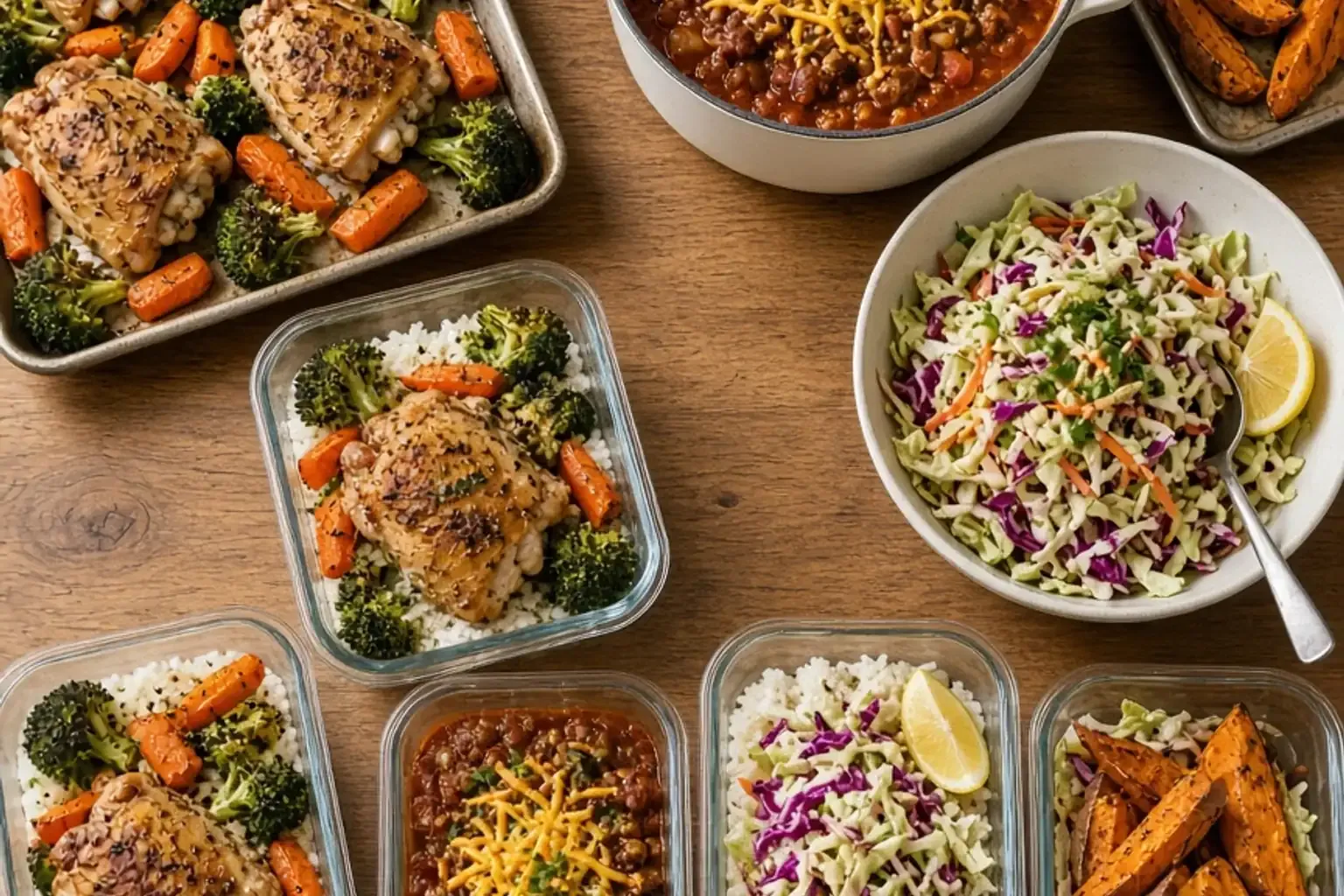
You can prep five beginner-friendly recipes in a single two-hour Sunday session by cooking in a fixed order: oven dishes first, one stovetop item staggered mid-way, and anything with dressing or fresh greens chilled immediately. The sequenced cook order below, plus fridge-life for every component, is the whole first session.
Key takeaways
- Cook five beginner recipes in one two-hour session by starting oven dishes first, staggering one stovetop item, and making the no-cook slaw last.
- Batch components like rice, roasted vegetables, and chicken thighs, then mix them into different dinners instead of eating identical containers all week.
- Refrigerate cooked food within two hours and eat most prepped components within 3-4 days, freezing anything you won't finish by day four.
- Reheat saucy and grain-based meals in the microwave, but use a skillet or 375°F oven for anything you want to stay crispy.
- Save each recipe to a digital cookbook right after prep so next Sunday's session is a lookup, not a scroll through saved videos.
What does 'simple meal prep' actually mean for a total beginner?
Simple meal prep means batch-cooking components and two or three repeatable lunches or dinners on Sunday, not filling your fridge with 21 identical containers. You cook rice, roast vegetables, prepare one or two proteins, and mix them into different weeknight dinners so you are not eating the same plate five days straight. Style-level options (batch, component, low-carb, high-protein) live in easy weekly meal prep ideas.
Batch components vs full meals
Components give you flexibility. A tray of chicken thighs, a pot of rice, and a jar of sauce become tacos one night and grain bowls the next. Full meals in single containers work better for grab-and-go lunches. Most beginners do best with a mix: a few components for dinners, two assembled lunches.
Why five recipes is the right first session
Five recipes fill a two-hour window without overwhelming you. Save each one before you start so nothing lives in a TikTok video you will have to rewind later, and keep them in one place. The capture step is in saving recipes from social media. Store cooked food within two hours and plan to eat refrigerated portions within four days, per FoodSafety.gov leftover guidance.
Which five recipes work best for a first meal prep session?
The five picks and why they made the list
Your first prep should use recipes that forgive small mistakes, hold well in the fridge, and share ingredients. The five below do all three:
| Recipe | Why it works for beginners | Fridge life |
|---|---|---|
| Sheet-pan chicken thighs with roasted vegetables | Hard to overcook; thighs stay juicy after reheating | 4 days |
| Big pot of rice | Base for three of the five meals; reheats well with a splash of water | 3-4 days |
| Chili (beef or bean) | Tastes better on day three; stovetop-only, one pot | 3-4 days |
| Roasted sweet potatoes | Oven shares the sheet-pan's temperature; no extra attention | 4 days |
| Cabbage slaw with lemon vinaigrette | Made raw at the end, no cooking; stays crisp for days | 3-4 days |
Cooked leftovers, including chili, stay in the 3-4 day refrigerated window from USDA leftover guidance and the FoodKeeper cold storage chart. Chili often tastes better on day three, which is still inside that window; freeze what you will not eat by day four. A vegetarian version of the same component approach is in meal prep vegetarian ideas.
Ingredient overlap: the shortcut that saves you 15 minutes
Notice what repeats: onions, garlic, lemons, cabbage, and rice appear in multiple recipes. Buy once, chop once. Dicing all your onions at the start, while the oven preheats, is the single biggest time-saver in the session. A reusable shopping list built from a pantry base plus weekly protein and produce is in meal prep for beginners shopping list. CookBuddy does not generate grocery lists.
The chili simmers unattended while the sheet pan roasts, so two recipes cook at once without you watching either. Keep the slaw for last since it needs no heat.
Save each of these to one place as you go, so weeknight-you isn't rewinding a TikTok to find the chili steps. If your saved recipes live across screenshots and bookmarks, how to organize recipes shows how to pull them into a single cookbook before you shop.
What basic containers and tools do beginners actually need?
Skip the gadget aisle. Your first prep session needs four things: a set of glass or BPA-free plastic containers in two sizes (one meal-sized, one smaller for components like rice or sauce), a single sheet pan, one large pot, and a decent knife with a cutting board. Matching lids matter more than matching containers, so buy one brand in two sizes rather than a mixed set.
One safety rule worth knowing: the USDA's Food Safety and Inspection Service says perishable cooked food should be refrigerated within two hours, so build cooling time into your session rather than leaving pans out while you finish (USDA FSIS leftovers).
As you cook, snap a photo of each finished dish and save the recipe to your cookbook so weeknight dinner decisions stay off your plate. CookBuddy turns a recipe photo, webpage, or cooking video into a written recipe in under 3 seconds.
In what order should you cook everything in a two-hour window?
The order matters more than the recipes. Start the longest oven item first, keep one burner busy at all times, and cool things in the sequence you'll pack them. Here is the exact run sheet for these five dishes.
Minutes 0-20: oven first, grains second
Preheat the oven to 400°F the moment you walk into the kitchen, then get your hands on the chicken thighs and sheet-pan vegetables that need the longest cook. Season and slide them in before anything else touches a counter. Slide a second pan of sweet potatoes in at the same temperature so both trays roast together. While the oven does its job, start your grain. Brown rice takes 40-45 minutes, so it goes on the stovetop at minute 5. Wash and chop onions, garlic, and cabbage during these idle stretches instead of standing at the oven door.
Minutes 20-60: stovetop stagger
Start the chili once the onions are diced: brown the meat (or bloom spices for a bean chili), add the remaining ingredients, and let it simmer on a back burner while the sheet pans finish. Pull the chicken tray around minute 45 and let it rest on the stovetop. Sweet potatoes can stay in a few minutes longer if they still need color. Rice should be off the heat and spread on a sheet pan to cool before this block ends.
Minutes 60-120: assembly, cooling, and packing
The last hour is about cooling order, not cooking. Hot food steams itself soggy in a sealed container, so spread grains and proteins on sheet pans and get them into the fridge within 30 minutes of cooking. Rice needs the fastest path: cool it quickly and refrigerate within an hour. Toss the cabbage slaw last, once the stove is off, so the greens never sit near a hot pan. Pack in this sequence: chilled items first, room-temperature vinaigrette last, and leave lids cracked until everything stops releasing steam. If you saved the recipes from TikTok before your session, this is the quiet stretch where a written recipe beats rewinding mid-prep. Portion into day-labeled containers, wipe down, done with time to spare.
How long does each prepped component last in the fridge?
Most of your Sunday session holds for 3-4 days in airtight containers: cooked proteins, roasted vegetables, chili, and rice all sit in that window. Components with dressing, sauce, or fresh herbs stay closest to 3 days, so plan those for lunches early in the week.
The 3-4 day rule and when it bends
The rule bends for grains and rice. Cooked rice needs faster handling than everything else in your plan: cool it quickly, get it in the fridge within an hour, and eat it within 3-4 days. Serious Eats covers leftover-rice texture and reheating; USDA leftover guidance is the safety clock. Whole roasted vegetables and hardy proteins like chicken thighs can stretch to day 4; anything with a creamy sauce cannot.
Freezer extensions for day 5
Anything you won't eat by day 4 goes straight to the freezer on Sunday night. Soups, chili, cooked proteins, and rice all freeze well for a few weeks. Thaw overnight in the fridge, then reheat as usual.
Save each recipe's storage notes in your digital cookbook so next Sunday's session runs itself. CookBuddy does not have a meal planner; the capture-and-organize side of that habit is in AI meal planning and how to organize recipes.
How do you reheat prepped meals without ruining texture?
Match the reheating method to the component, not the container. Microwave anything saucy or grain-based: chili, curry, rice, and pasta all come back fine in 60-90 second bursts, stirred once halfway. Add a splash of water to rice first so it steams instead of drying out.
Skip the microwave for anything crispy. Reheat roasted vegetables, breaded chicken, and potatoes in a skillet over medium heat for a few minutes, or slide them into a 375°F oven for about 10 minutes while the rest microwaves. Reheat leftovers to 165°F, per USDA leftover guidance.
Store crunchy and wet things apart. Keep dressings, sauces, and crunchy toppings like tortilla strips or toasted nuts in their own small containers and add them after reheating. If a recipe came from a video and you saved it with CookBuddy, add the reheat method on that recipe so future-you doesn't guess.
How do you scale a beginner prep plan for more than five days?
Three levers, in order of effort. First, double one recipe rather than all five: most weeknight dinners scale fine at 2x, but check that your sheet pans and skillet aren't overcrowded, since steamed food ruins texture faster than a longer cook time.
Second, add a freezer slot. Cooked chicken keeps well beyond fridge life, so freeze portions you'll eat in week two. The USDA confirms cooked chicken and other poultry last 3 to 4 days in the fridge but stay safe frozen, so anything past day five goes straight to the freezer (USDA Food Safety and Inspection Service). Label containers with the cook date. A four-base, high-protein lunch version of that freezer split is in high protein meal prep ideas.
Third, swap the marathon Sunday for a second 30-minute weeknight session. Prep two fresh components midweek instead of stretching five-day-old food, and your fridge-life math resets. Fast plates that skip Sunday altogether sit in weeknight dinner ideas.
How do you keep track of the recipes you prepped?
Those five recipes often start as TikToks and Instagram saves, which means next Sunday you'll be rewinding videos and scrolling bookmarks to find them again. Fix that by dropping each one into a digital cookbook right after you prep it, so next week is a lookup, not a search. The TikTok-specific capture path is in save recipes from TikTok.
CookBuddy turns a saved video, webpage, or recipe photo into a written recipe in under 3 seconds, on iOS and Android, and keeps everything in one place. Free includes 5 AI imports per month, unlimited storage, and up to 3 extra imports from ads; Premium is $3.99/month or $35.99/year for unlimited imports. Saving all five from video in one sitting uses the Free monthly cap, so convert them as you find them, type keepers by hand (typed recipes do not use the import allowance), or upgrade if the whole session is video-sourced. Rename each entry with the cook order you used ("1 - chili," "2 - rice"), and the two-hour sequence from this guide becomes your default template.
CookBuddy does not have a meal planner or grocery lists. The payoff is still smaller mental load: no sticky notes, no "it's in one of the cookbooks on the shelf," and no lost recipe when an account deletes a post.
FAQ
Is 2 hours enough time to meal prep for a whole week?
Yes, if you cook in a fixed order and let two recipes run at once. The sheet pan roasts while the chili simmers unattended, and the slaw needs no heat at all. Five beginner-friendly recipes, including a batch of rice, fit comfortably in a two-hour Sunday session. Eat refrigerated portions within 3-4 days and freeze the rest rather than stretching one cook across seven fridge days.
Can I meal prep rice and chicken for 5 days?
Not safely in the fridge. Cooked rice should be cooled quickly, refrigerated within an hour, and eaten within 3-4 days. Cooked chicken lasts 3-4 days refrigerated too. Anything you won't eat by day 4 should go into the freezer on Sunday night, then thaw overnight when you need it.
Do you put meal prep in the fridge hot or let it cool first?
Refrigerate within two hours of cooking, per USDA guidance, so build cooling time into your session. Rice is the exception: cool it fast and get it in the fridge within an hour. Divide food into shallow containers so it chills quickly rather than sitting in one deep, hot pot.
What should I meal prep as a beginner with no cooking skills?
Start with recipes that forgive small mistakes and hold well in the fridge. Sheet-pan chicken thighs with roasted vegetables is nearly impossible to overcook, and a big pot of chili tastes better by day three. Add rice, roasted sweet potatoes, and a raw cabbage slaw, which needs no cooking at all.
How many meals should I prep my first time?
Five recipes in one two-hour session is the right starting point: enough to fill the fridge without overwhelming you. Aim for a mix of a few batch components for dinners and two assembled grab-and-go lunches. Once that feels routine, double a single recipe or add a midweek 30-minute session.
meal-prepbeginnersrecipescookbuddyleftovers
CookBuddy turns cooking videos, webpages, and photos into written recipes you can keep in one cookbook.