Ideas for Meal Prep for Weight Loss That Fit Your Week
· CookBuddy
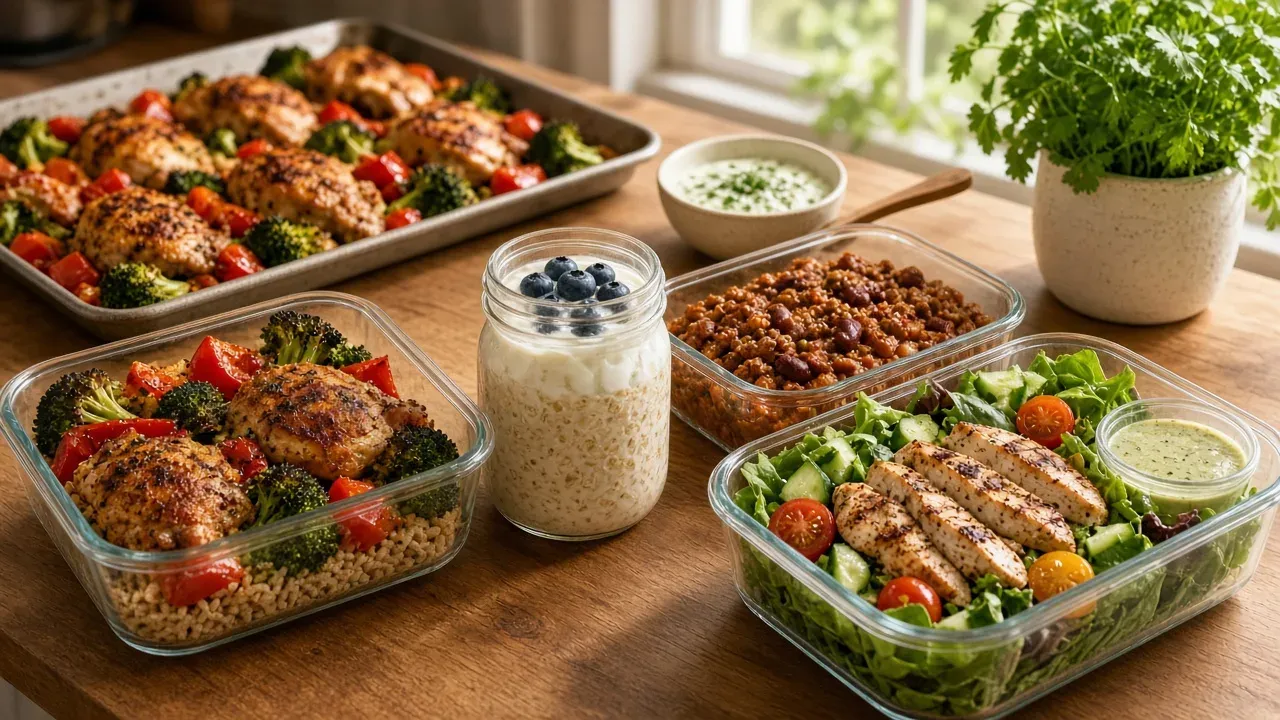
The best ideas for meal prep for weight loss are the ones matched to three things: your calorie target, the prep time you actually have, and the equipment in your kitchen. This guide gives you a matrix that pairs six prep ideas with those inputs, plus a decision flow for building a weekly rotation you can repeat instead of cooking seven different meals.
Key takeaways
- A meal prep idea only works for weight loss if it fits your calorie target, available prep time, and kitchen equipment.
- Estimate a weight-loss intake at roughly 10-12 calories per pound of bodyweight, then divide it into per-meal portions.
- Cooked proteins keep 3-4 days in the fridge, so plan a midweek mini-prep or freezer portions for days five and six.
- The 1-2-1-1 rule (one protein, two vegetables, one starch, one sauce) builds five varied dinners from a single prep session.
- Rotate sauces weekly and freeze two portions every prep so the rotation survives skipped Sundays.
What makes a meal prep idea actually work for weight loss?
Most meal prep ideas fail for fat loss because they're picked for the photo, not for your week. An idea works only if it fits three things: the calories you need to eat, the time you actually have to prep, and the equipment in your kitchen. Miss one and the container goes in the fridge until Thursday, then the trash.
The three inputs that decide everything
Weight loss comes down to a calorie deficit, and a sustainable one means losing about 1 to 2 pounds per week, per the CDC's guidance on healthy weight loss. So your calorie target is the first input. The second is prep time: a 90-minute Sunday plan collapses the first week you get home late. The third is equipment. A sheet-pan idea is useless if you don't own a sheet pan.
If you already have a two-hour Sunday habit and just need the cook itself, easy weekly meal prep ideas walks through batch vs component styles. This page is the filter that comes first: which idea is even eligible for your week.
Why recipe lists alone don't build a habit
A list of 30 ideas gives you options but no system. A rotation built from your three inputs gives you defaults, which is what removes the weekly "what's for dinner" mental load. Once you've picked ideas that fit, keeping them in one place matters too — if you save recipes from TikTok, AI meal planning shows how to turn saved videos into a written plan you can cook from.
How do you set a calorie target before you prep anything?
Skip the apps and lab tests. A working estimate: take your bodyweight in pounds and multiply by 10-12 for a typical weight-loss intake, or use an online TDEE calculator such as the NIH Body Weight Planner and subtract 300-500 calories. Either route lands you in a reasonable daily range. If you want a sanity check, most adults lose roughly 0.5-1 lb per week in a moderate deficit, which lines up with the CDC's 1-to-2-pound weekly range when the week is consistent.
Turning a daily number into per-meal portions
Divide your daily range by your eating pattern. Three meals plus a snack means each dinner prep container gets about a third of the total. If your target is 1,800 calories, that is roughly 500-550 per meal and 150-200 for the snack. Write the number on the container or in your notes so every recipe you save has a portion attached. Keeping the math with the recipe is easier if you organize saved recipes in one place.
If your dinners need a protein floor as well as a calorie ceiling, high protein meal prep ideas maps 25-40g per meal onto the same Sunday cook.
When to adjust the target
Weigh in once a week, same day, same time. If weight has not moved after two to three weeks, drop the daily number by 100-150 calories. If you are losing faster than 2 lbs a week and feeling drained, add 100 back. Adjust the per-meal portions, not just the total, so your prep containers stay accurate.
The matching matrix: which prep idea fits your calories, time, and equipment?
| Prep idea | Calorie range per serving | Sunday prep time | Equipment needed |
|---|---|---|---|
| Sheet-pan chicken and vegetables | 400-550 | 40 min | Oven, one sheet pan |
| Overnight oats, five jars | 300-400 | 15 min | Fridge, jars |
| Slow cooker chili | 350-500 | 20 min active | Slow cooker |
| Rice, protein, roasted veg containers | 450-600 | 60 min | Oven, stovetop, containers |
| Big salad base with grilled protein | 300-450 | 30 min | Grill pan or stovetop |
| Soup batch, six portions | 250-400 | 45 min | Large pot, blender optional |
How to read the matrix
Pick the row that matches all three columns, not just calories. A 500-calorie chili does nothing for you if you own no slow cooker, and a 15-minute oats recipe is wasted on someone with 90 free minutes on Sunday. Start with equipment, then time, then narrow by calorie target. Most cooks 3-5 times a week land on two rows, not one.
Cooked proteins keep 3-4 days in the fridge, so plan a midweek mini-prep for anything you want fresh on day five or six, per FoodSafety.gov's cold storage chart. The shopping list behind those two rows is in meal prep for beginners shopping list. If the chili row is the one that fits, meal prep crock pot ideas turns it into a five-dinner week.
Combining two ideas when one isn't enough
If your calorie target sits below 400 and your schedule is heavy, pair a low-calorie row with a filling one: soup for lunches, sheet-pan chicken for dinners. Save each recipe once in a recipe keeper so the rotation lives in one place instead of scattered across saved TikToks. If you're comparing apps for that job, see our recipe keeper app review. Plant-based weeks can use the same two-row trick with meal prep vegetarian ideas.
Which prep ideas work with almost no equipment?
If your kitchen is a rented apartment with a hot plate, or a dorm with a shared microwave, you can still run a weekly rotation. The trick is picking prep ideas that lean on a single burner, a fridge, and containers instead of an oven or a food scale.
Jar salads and layered bowls
Mason jar salads are the lowest-effort prep there: dressing on the bottom, hardy grains or beans in the middle, greens on top, shaken out onto a plate when you eat. Layered bowls work the same way with whatever protein you can assemble cold, like canned tuna, rotisserie chicken, or pre-cooked lentils. Five jars on Sunday covers five lunches, and nothing needs reheating.
Stovetop-only batch cooking
One pot of rice, quinoa, or pasta made once feeds the whole week, and a second burner handles eggs, ground turkey, or a stir-fry base. That is enough for a repeatable rotation of bowls, wraps, and quick weeknight dinners. Save the recipes you like in one place so you are not rewinding a TikTok mid-cook; easy weekly meal prep ideas shows how to build that rotation around what your kitchen can actually do.
How do you build a weekly rotation instead of cooking seven different meals?
The 1-2-1-1 rule
Pick one anchor protein, two vegetables, one starch, and one sauce you vary across the week. That gives you five dinners from a single prep session without eating the identical plate twice. The portion sizes come straight from the food-group targets in USDA MyPlate: roughly a quarter of the plate protein, half vegetables, a quarter grains.
A worked example week at ~1,600 calories
Sunday you cook chicken thighs, broccoli and bell peppers, and a pot of rice. Monday is chicken, broccoli, and rice with a soy-ginger sauce. Wednesday the same base becomes fajita bowls with the bell peppers and a packet of taco seasoning. Friday you shred leftover chicken into a rice bowl with charred broccoli and a yogurt-hot-sauce drizzle.
The 1-2-1-1 structure means the anchor protein carries the week: one shopping list, one cooking block, and sauces doing the work of variety. If you found each sauce on TikTok, save each one as it plays so nothing lives only in your watch history — the same approach works for the base recipes you prep from. Weigh the protein raw, portion the starch with a measuring cup, and the ~1,600-calorie day holds together without counting every gram.
How much prep time do you actually need on Sunday?
Match the session length to how many meals you need, not to what a TikTok prep video shows. Most weeknight dinners for weight loss come from one of three realistic time budgets.
The 30-minute session
Thirty minutes covers two to three dinner portions: one tray of roasted chicken thighs and vegetables, or a pot of chili that stretches across two nights. This is the right session when your week is light on cooking or you already have leftovers banked. Pick one protein, one vegetable, one grain, and stop.
The 90-minute session
Ninety minutes produces five to six dinner portions across two or three recipes. Run your oven continuously: sheet pan one goes in while you chop for the stovetop pot. Cook two proteins and one big vegetable side, then portion into containers as each finishes. The trade-off is real: you give up a Sunday afternoon block, and you buy back four weeknights of zero dinner decisions.
If 90 minutes sounds like too much, start with the 30-minute version and add a second session midweek. That 15-minute top-up is also how you stay inside the 3-4 day fridge window without freezing everything.
How do you keep track of prep recipes you found on social media?
A rotation only works if the recipes live in one place. Planning meals ahead is linked with better diet quality and consistency, per a French cohort study of more than 40,000 adults, so losing a saved video to your Instagram archive costs you more than a recipe.
Saving video recipes without rewinding
Pausing a TikTok every few seconds to transcribe ingredients is the fastest way to stop prepping. CookBuddy turns a cooking video, webpage, or recipe photo into a written recipe in under 3 seconds, and everything you save stays in your cookbook on iOS and Android. The same applies to blog posts: the recipe is extracted without the SEO filler about the author's childhood.
Turning saved recipes into a weekly plan
Scattered saves become a rotation when you tag each recipe with its calorie bucket and prep time, then pull five or six into your week. CookBuddy is the capture-and-keep side of that: 50+ dietary filters, unlimited storage, and the recipe stays even if the original video is taken down. It does not build a grocery list or auto-schedule the week, so write the 1-2-1-1 shopping list in your notes app the way the beginners shopping list does.
Paprika, ReciMe (iOS only), and Recipe Keeper all do save-and-plan in some form; pick whichever fits your phone, but keep the plan and the recipes in the same app so your partner sees what you saved. CookBuddy Free includes 5 imports per month, unlimited storage, and 3 extra imports from ads. Premium is $3.99 per month or $35.99 per year for unlimited imports.
How do you keep meal prep interesting after week three?
The rotation works until it doesn't. Two fixes keep it alive without rebuilding your whole system.
The sauce shelf trick
Keep the protein and veg rotation identical, but rotate the sauce each week: peanut, salsa verde, teriyaki, harissa yogurt. Same chicken and rice, four different dinners. Buy two or three sauces each grocery run so the swap takes zero extra prep time.
Freezer swaps for the weeks you fall off
Every fourth week, you will skip Sunday. Plan for it: freeze two portions of whatever you cooked in weeks one and two, then reheat those during the off week. The rotation breaks on purpose, you eat something you already liked, and you restart fresh instead of ordering takeout three nights straight.
FAQ
What is the 2-2-2 rule for meal prep?
There is no single established 2-2-2 rule, and versions vary across social media. The most common one means prepping two proteins, two vegetables, and two starches on Sunday, giving you enough combinations for a week of dinners without repetition. It works for the same reason the 1-2-1-1 structure does: variety comes from mixing components, not cooking seven separate recipes.
Is it cheaper to meal prep for weight loss or buy ready meals?
Meal prepping is almost always cheaper per meal. A home-cooked batch of chili or sheet-pan chicken typically costs a few dollars per serving, while store-bought diet-ready meals often run $8-12 each. Prepping also cuts food waste, since you buy one shopping list built around a rotation instead of impulse ingredients that spoil by Thursday.
How long does meal prep actually last in the fridge?
Cooked proteins, rice, and roasted vegetables keep 3-4 days refrigerated, per FoodSafety.gov's cold storage chart. That means a five-day prep needs freezer portions for days four and five or a 15-minute midweek top-up session. Soups and chili often hold slightly longer, while dressed salads degrade fastest, so keep dressing separate until you eat.
Can I lose weight meal prepping without counting calories?
Yes, if your containers follow rough portion structure. Using the MyPlate proportions (half vegetables, a quarter protein, a quarter starch) and consistent container sizes keeps most people in a deficit without weighing anything. The catch is sauces and oils, which add hundreds of untracked calories. Measure those, weigh in weekly, and shrink portions if the scale stalls for three weeks.
What should beginners prep first if they've never meal prepped before?
Start with the 30-minute session: one tray of sheet-pan chicken thighs and vegetables, portioned into two or three containers. It needs only an oven and one pan, it reheats well, and it teaches portioning without a big time commitment. Add overnight oats the following week for breakfasts, then build toward a full rotation once the Sunday habit sticks. If weeknights are the only time you have, weeknight dinner ideas covers meals that skip the Sunday cook entirely.
meal-prepweight-lossleftoversrecipescookbuddy
CookBuddy turns cooking videos, webpages, and photos into written recipes you can keep in one cookbook.